

Introduction
An AC capacitor is an electrical component designed to store and release electrical energy in AC circuits, and it is widely used in motors, air-conditioning equipment, power systems, and AC filtering circuits.
To better understand its role in electrical systems, it is helpful to examine its key characteristics and working principle.
This article explains what an AC capacitor is, its key characteristics, working principle, types, functions, applications, common failure signs, selection factors, and basic replacement considerations.
What Is an AC Capacitor?
An AC capacitor is a capacitor designed to operate in alternating-current circuits. It stores electrical energy and releases it when needed, helping AC motors start, run efficiently, or filter unwanted electrical signals.
AC capacitors are commonly found in motor-driven equipment such as air conditioners, fans, pumps, compressors, and other electrical systems.
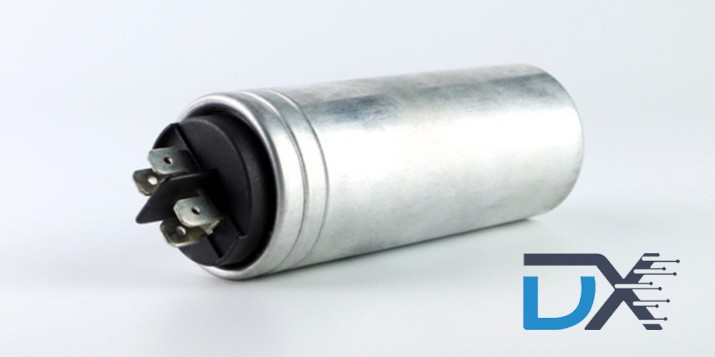
Main Features of AC Capacitor
- Designed for AC voltage and current conditions
- Usually non-polarized in AC motor applications
- Available in different capacitance and voltage ratings
- Commonly uses polypropylene film as the dielectric in motor-run capacitors
- Commonly manufactured in round or oval cases
Key Characteristics of AC Capacitor
Understanding the main specifications of an AC capacitor helps users select a suitable component and avoid problems caused by incorrect electrical ratings. The most important characteristics include capacitance, voltage, frequency, terminals, and case shape.
- Capacitance
Capacitance indicates how much electrical charge a capacitor can store and is measured in microfarads (µF) for many AC motor capacitors. The required capacitance depends on the motor and circuit design, so the replacement value should normally match the original specification.
For example, CDE motor-run products cover capacitance values from 5 to 120 µF in one of its product series, while other AC motor capacitor series cover different ranges. Therefore, there is no single capacitance value that applies to all AC capacitors.
- Voltage
Rated voltage is the maximum AC voltage that the capacitor is designed to withstand under its specified operating conditions. Common AC motor capacitor products are available at ratings such as 250, 370, 400, 440, and 480 VAC, while some products are rated higher.
The replacement capacitor should not have a lower voltage rating than the application requires. IEC 60252-1 also specifies that operation above the rated voltage can reduce capacitor life.
- Frequency (Hz)
Frequency describes how many times the AC waveform completes a cycle per second and is measured in hertz (Hz). The frequency rating of a capacitor must be compatible with the circuit because AC current and capacitor losses can change with frequency.
IEC 60252-1 covers AC motor capacitors used with asynchronous motors supplied from systems with frequencies up to and including 100 Hz. In many household power systems, the normal mains frequency is 50 or 60 Hz.
- Case Shapes
AC capacitors are available in several physical shapes, with round and oval cases being common in motor applications. The case may be made from materials such as plastic or aluminum depending on the product design.
Dual-run capacitors can also combine two capacitance values in one case, helping save installation space.
How Does an AC Capacitor Work?
An AC capacitor works by storing electrical energy and releasing it at the appropriate time to influence voltage, current, or motor operation.
The basic working process can be summarized as follows:
1. AC power is supplied: The capacitor is connected to an AC circuit and responds to the changing voltage.
2. Electrical energy is stored: The capacitor stores energy in its electric field.
3. Energy is released: The stored energy is released back into the circuit as required.
4. Current and voltage are affected: The capacitor changes the relationship between current and voltage in the circuit.
5. Motor operation is supported: In AC motor applications, this phase relationship can help produce the torque needed for starting or efficient running.
AC Capacitors vs. DC Capacitors
AC capacitors and DC capacitors are both designed to store electrical energy, but their electrical ratings, construction, and applications can differ. The key difference is that an AC capacitor must be suitable for continuously changing voltage and current conditions, while a DC capacitor is generally specified for DC voltage operation.
|
Feature |
AC Capacitors |
DC Capacitors |
|
Purpose |
Motor starting, motor running, AC filtering, power applications |
DC filtering, energy storage, coupling, DC-link applications |
|
Polarity |
Common AC motor capacitors are non-polarized |
Can be polarized or non-polarized depending on the capacitor type |
|
Dielectric Type |
Metallized polypropylene film is common in motor-run capacitors; other dielectric types are also used |
Electrolytic, ceramic, film, and other dielectric technologies are available |
|
Terminal Types |
Fast-on, tabs, lugs, wires, and other application-specific terminals |
Radial leads, axial leads, screw terminals, snap-in terminals, and others |
|
Shapes |
Commonly round or oval in motor applications |
Cylindrical, box-shaped, disc, rectangular, and other forms |
|
Applications |
AC motors, compressors, fans, pumps, HVAC equipment, AC filters |
Power supplies, DC links, electronic circuits, energy storage, filtering |
|
Voltage Rating |
Specified in VAC for AC applications |
Commonly specified in VDC for DC applications |
|
Frequency Consideration |
AC frequency and ripple current are important |
Operating frequency and ripple current depend on the application |
AC Capacitor Functions
AC capacitors perform several important functions in electrical equipment, especially in motor and power applications.
- Motor starting:
Start capacitors provide a temporary increase in starting torque. They help the motor overcome the resistance of being stationary and begin rotating. - Motor running:
Run capacitors remain connected during normal operation and help maintain the required phase relationship between motor windings. This supports stable and efficient motor operation. - Power factor improvement:
Capacitors can compensate for part of the reactive power in AC systems. This can improve the relationship between useful power and apparent power in suitable applications. - AC filtering:
AC filter capacitors can reduce unwanted high-frequency harmonic content from AC power lines. KEMET describes AC filter capacitors as components used to filter harmonic content in AC/DC converter inputs and DC/AC inverter outputs. - Voltage and signal support:
Capacitors can influence AC voltage and current behavior in circuits, helping equipment achieve its intended electrical performance.
Applications of AC Capacitors
AC capacitors are used in many electrical and electronic systems, including:
- Air conditioners: Used with compressor and fan motors to support starting and continuous operation.
- Fans and blowers: Help single-phase motors start and operate correctly.
- Pumps: Used with motors in water pumps and other motor-driven equipment.
- Compressors: Provide electrical support for compressor motors in HVAC and refrigeration equipment.
- Industrial motors: Used in suitable single-phase motor applications.
- AC filtering systems: Used to reduce unwanted harmonics and electrical interference.
- Power conversion equipment: AC filter capacitors can be used in converter and inverter systems.
Types of AC Capacitors
AC capacitors can be classified according to their function, construction, and application. In AC motor applications, the three common types are start capacitors, run capacitors, and dual-run capacitors.
Start Capacitors
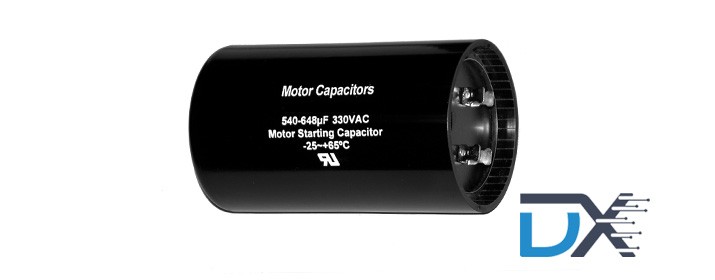
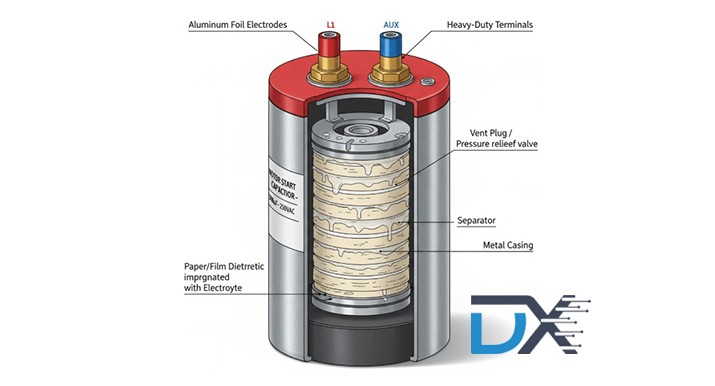
A start capacitor is designed to provide a strong but temporary boost during motor startup. It is normally removed from the circuit after the motor reaches operating speed, so it is not intended for continuous operation.
IEC 60252-2 specifically covers motor start capacitors and includes both film-based and electrolytic motor-start capacitor technologies.
Run Capacitors
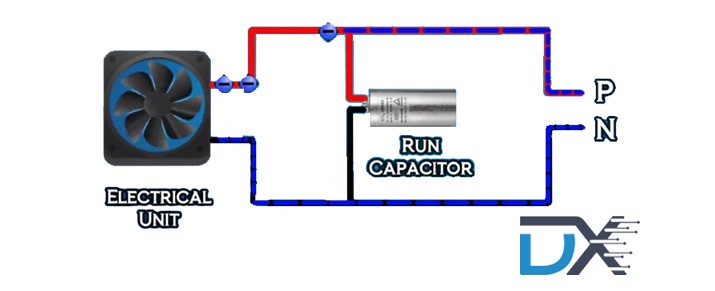
A run capacitor is designed to remain in the circuit while the motor operates. It helps maintain the required phase relationship and supports continuous motor performance.
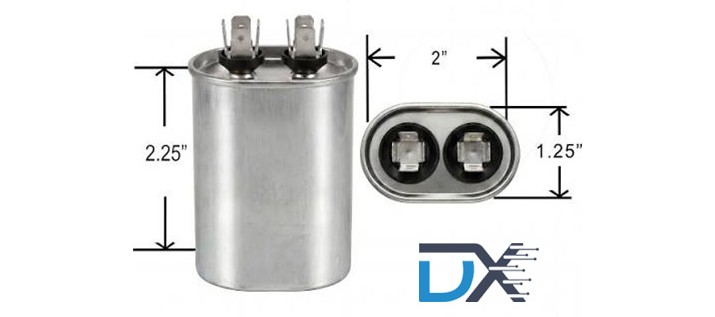
Motor-run capacitors are commonly made with metallized polypropylene film and are available in different capacitance and AC voltage ratings. Their cases may be round or oval depending on the design.
Dual-Run Capacitors
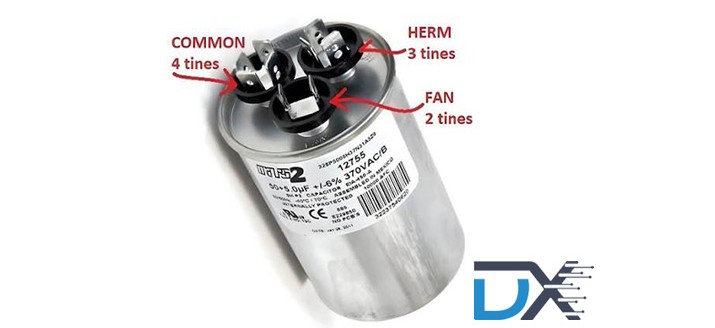
A dual-run capacitor combines two capacitance values in one physical unit. This design is commonly used when two motor functions, such as a compressor and fan, need separate capacitance values but can share one capacitor body.
Dual-run products are available in both round and oval cases, with markings such as two different µF values and a common voltage rating.
Signs of a Failing AC Capacitor
A damaged AC capacitor can affect motor starting and normal operation. Some failures are electrical and may not be visible, so symptoms from the equipment should be considered together with the capacitor's physical condition.
Type1: Startup Problems
- Motor does not start: The motor may fail to start when the capacitor cannot provide the required starting support.
- Motor starts slowly: Reduced capacitance can make the motor take longer to reach operating speed.
- Repeated starting attempts: A motor may attempt to start but fail to reach stable operation.
- Circuit trips during startup: A faulty capacitor can contribute to abnormal motor current and protective-device trips.
Type2: Performance Issues
- Motor runs inefficiently: A capacitor with an incorrect or degraded capacitance value can affect motor operation.
- Reduced motor performance: The motor may not produce its expected operating performance.
- Overheating: Abnormal electrical conditions can increase motor or capacitor stress.
- Intermittent operation: A deteriorated capacitor can contribute to unstable equipment behavior.
Type3:Unusual Noises or Smells
- Humming: A motor that hums without starting can indicate a problem in its starting circuit, including the capacitor.
- Clicking: Repeated switching or starting attempts can produce unusual clicking sounds.
- Burning smell: Overheating or internal failure may produce a noticeable burnt odor.
- Abnormal operating noise: A change in motor sound can indicate that the motor is not operating normally.
Type4: Visual Indicators
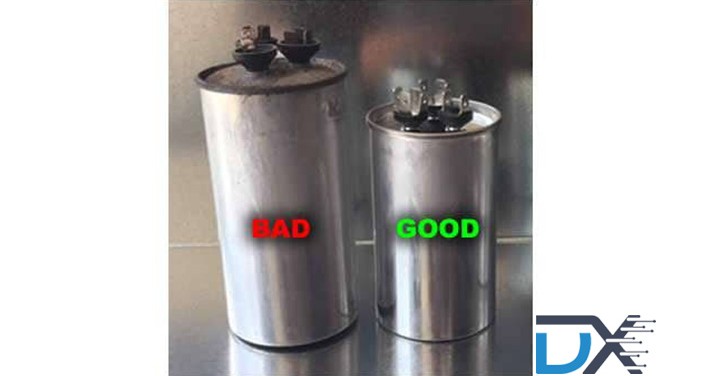
- Bulging case: A swollen capacitor case is a common visible warning sign of internal failure.
- Leaking material: Leakage can indicate physical or internal damage.
- Burn marks: Darkened or burned areas may indicate overheating or electrical damage.
- Damaged terminals: Loose, corroded, or burned terminals can prevent a reliable electrical connection.
How to Choose the Right AC Capacitor
Choosing an AC capacitor requires more than matching its physical size. The capacitance, voltage, application, terminals, temperature conditions, and available installation space should all be checked before selecting a replacement.
Capacitance: Select the capacitance specified by the motor or equipment manufacturer. Do not choose a value simply because the capacitor has the same physical size.
Rated voltage: Select a capacitor with a suitable AC voltage rating for the application. A lower-than-required voltage rating should not be used. IEC 60252-1 notes that operation above the rated voltage can reduce service life.
Frequency: Check that the capacitor is suitable for the operating frequency of the equipment, especially when the capacitor is used in motor or filtering applications.
Capacitor type: Determine whether the equipment requires a start, run, or dual-run capacitor before purchasing a replacement.
Terminal type: The replacement should have terminals that match the original connection method, such as Fast-on terminals or other specified connectors.
Case shape and size: Check the available installation space and mounting method. A capacitor with the correct electrical specifications may still be unsuitable if it cannot be installed securely.
Temperature rating: Check the expected operating temperature. Capacitors designed for different temperature conditions can have different service-life characteristics.
Safety and certification: For equipment connected to mains power, select products designed and certified for the intended application. Relevant standards can include IEC 60252-1 for AC motor capacitors.
Cost: Cost varies according to capacitance, voltage rating, materials, construction, certifications, temperature rating, and expected service life.
Lower-cost options: Generally suitable for less demanding applications when their ratings meet the equipment requirements.
Mid-range options: Often provide a balance between price, electrical performance, and service life.
Higher-cost options: May provide higher temperature ratings, longer specified life, tighter tolerances, or additional safety features.
How to Replace an AC Capacitor
AC capacitors can store electrical energy even after equipment has been switched off. Because many AC capacitor applications involve mains voltage and potentially hazardous stored energy, replacement should be performed by a qualified person using the equipment manufacturer's procedures.
|
Step |
What to Do |
Important Precautions |
|
1. Identify the capacitor |
Check the original capacitor's capacitance, voltage, type, and terminal configuration. |
Do not rely only on appearance or physical size. |
|
2. Disconnect power |
Turn off and isolate the equipment from its power source. |
Never work on a capacitor while the equipment is energized. |
|
3. Verify electrical safety |
Confirm that the circuit is safe before touching the capacitor. |
Follow the manufacturer's discharge and safety procedures; do not assume that switching off power has removed all stored energy. |
|
4. Record the connections |
Identify the original terminal connections before removal. |
Incorrect wiring can damage equipment or create a safety hazard. |
|
5. Remove the old capacitor |
Disconnect the terminals and remove the capacitor from its mounting point. |
Use appropriate tools and avoid contacting exposed conductors. |
|
6. Install the replacement |
Install a capacitor with the correct specifications and secure it properly. |
Match capacitance, voltage, type, terminals, and mounting requirements. |
|
7. Check the installation |
Inspect the connections and mounting before restoring power. |
Make sure terminals are secure and no conductors are exposed. |
|
8. Test the equipment |
Restore power and verify that the equipment operates normally. |
Stop operation if abnormal noise, smell, overheating, or other problems occur. |
Conclusion
An AC capacitor is an important component in many AC electrical systems, especially motor-driven equipment. It can support motor starting and running, improve circuit performance, and filter unwanted electrical components.
Understanding capacitance, voltage, frequency, terminals, case shape, capacitor type, and application requirements makes it easier to choose the right AC capacitor. When replacing one, electrical specifications and safety should always be checked before cost or appearance.
Frequently Asked Questions
What Is an AC Capacitor and What Does It Do?
An AC capacitor is an electrical component that stores and releases electrical energy in an air-conditioning system. It provides the energy needed to help start the compressor and fan motors and helps maintain stable motor operation.
What Is the Typical Lifespan of an AC Capacitor?
An AC capacitor can typically last about 10–20 years, although its actual service life depends on factors such as operating temperature, usage, and maintenance. High temperatures and other stressful operating conditions can shorten capacitor life.
Is It Safe to Replace an AC Capacitor Yourself?
Replacing an AC capacitor is generally not recommended as a DIY repair because the capacitor can retain a dangerous electrical charge even after the power is turned off. Carrier recommends having a qualified HVAC professional perform the replacement and follow proper discharge and safety procedures.
How Can You Tell If an AC Capacitor Has Failed?
Common signs of a bad AC capacitor include a humming outdoor unit, difficulty starting, poor cooling, or the fan or compressor failing to start. A swollen case, oil leakage, or abnormal capacitance measurement can also indicate capacitor failure, but these symptoms can have other causes and should be properly diagnosed.
What Does It Cost to Replace an AC Capacitor?
The cost depends on the capacitor type, equipment, location, and whether professional labor is included. Carrier currently estimates about $100–$400 for typical AC capacitor replacement, including the part and professional installation, while individual capacitor parts can cost much less depending on their specifications.


